Inclusive Early Warning Systems: Leaving No One Behind
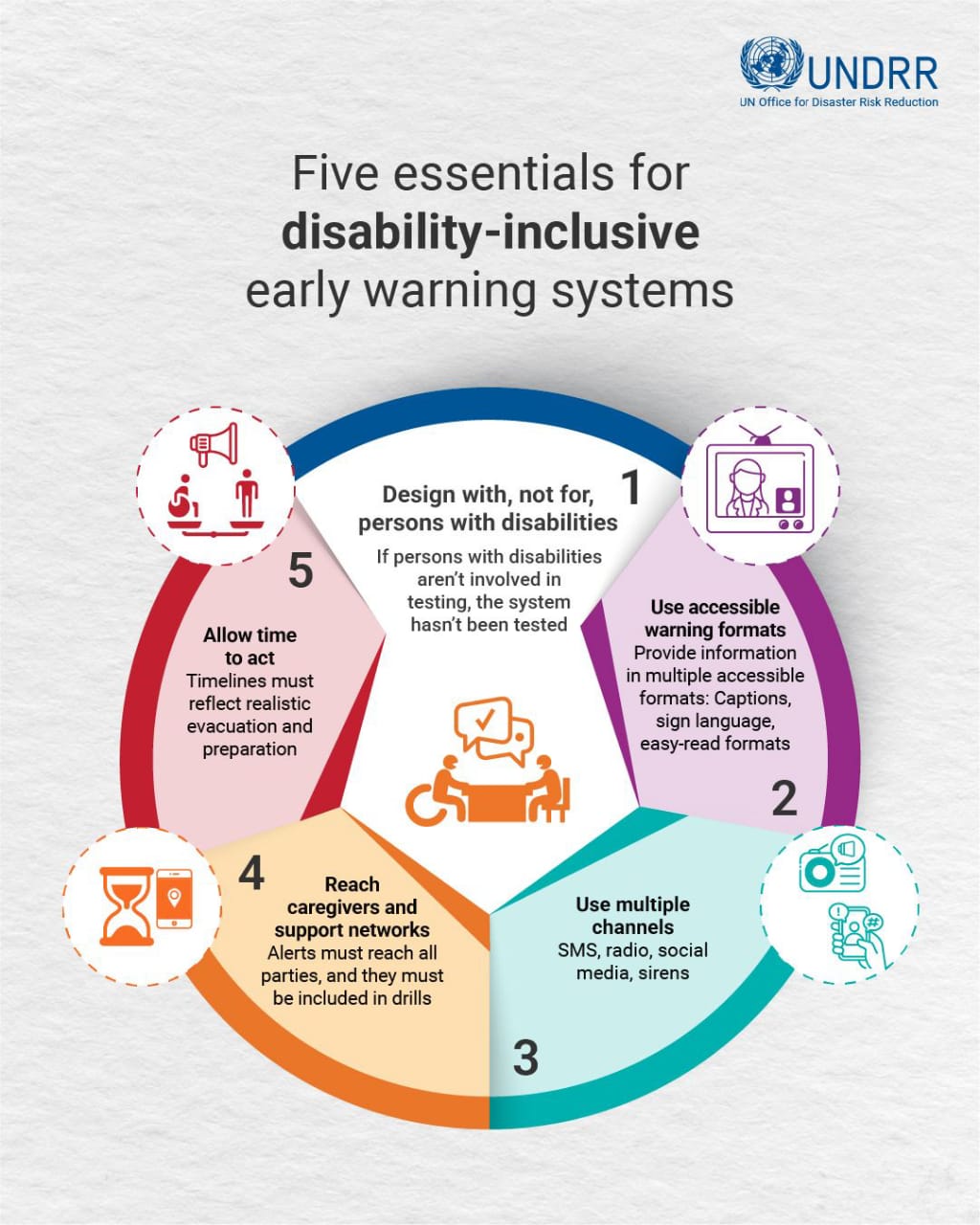
Effective early warning systems are only truly effective when they reach—and can be acted upon by—everyone, including persons with disabilities. Inclusion is not optional; it is essential for saving lives and ensuring resilience in the face of disasters. To make early warning systems inclusive and actionable, five key principles must guide their design and implementation:
Co-design with persons with disabilities Systems must be developed with persons with disabilities—not for them. Their lived experiences ensure that warnings are practical, relevant, and usable. If they have not tested it, it has not been tested.
Ensure accessible communication formats Warnings should be available in plain language, sign language, captioning, and audio descriptions. A warning that cannot be understood is not a warning at all.
Use multiple communication channels Relying on a single channel is risky. Combining SMS, radio, sirens, and community-based approaches such as door-to-door outreach ensures broader reach and reliability. Engage caregivers and support networks.
Inclusion goes beyond individuals. Caregivers and support systems must also receive timely information to support effective response and evacuation. Allow adequate time for safe action
Different individuals require different levels of preparation. Early warnings must provide sufficient time to enable safe and dignified evacuation for all. Early warning systems must work for everyone—no exceptions.