


Persons with disabilities often remained invisible within national planning processes, resulting in limited access to services, inadequate resource allocation, and policies that did not fully reflect their realities.
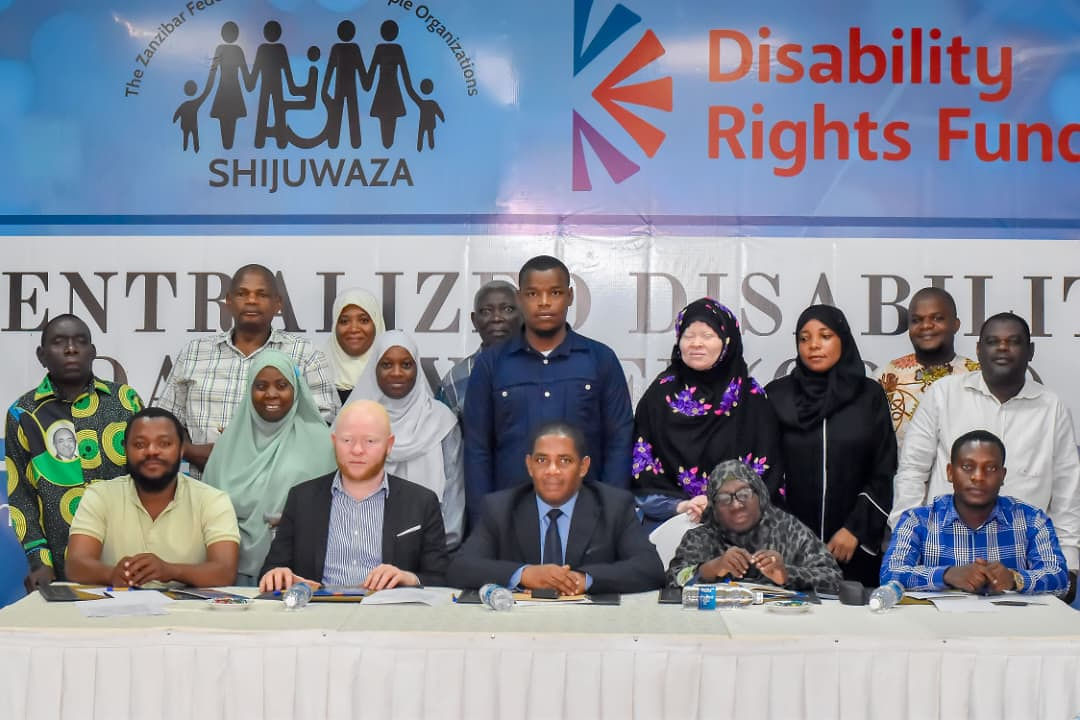
Recognizing this challenge, the Disability Rights Fund (DRF) partnered with the Zanzibar Federation of Disabled People Organizations (SHIJUWAZA) to implement the Centralized Disability Data System (CDDS) Project. Within only six months of implementation, the project has already begun transforming the disability sector by placing disability data at the center of policy discussions, institutional reforms, and national development planning.
Bringing Disability Data to the National Agenda
From February to July 2026, the CDDS Project successfully elevated disability data from a technical issue discussed within disability circles to a matter of national public interest. Through policy dialogues, stakeholder engagement, media campaigns, and capacity-building initiatives, the project created unprecedented momentum toward establishing a centralized and inclusive disability data system in Zanzibar.
The official launch of the project in both Unguja and Pemba brought together government institutions, Organizations of Persons with Disabilities (OPDs), civil society organizations, development partners, and media stakeholders. These engagements generated a shared understanding that disability inclusion cannot be achieved without accurate and reliable data.
Influencing National Disability Classification Standards
One of the most significant achievements supported by DRF was the successful advocacy that led the Zanzibar National Disability Council to publicize a contextualized disability-classification framework. The framework aligns with internationally recognized Washington Group standards while reflecting Zanzibar’s unique social and cultural realities.
This milestone addresses a longstanding challenge in disability identification and classification. By providing a more contextualized framework, Zanzibar is now better positioned to collect meaningful disability data that can inform inclusive planning, budgeting, and service delivery.
Empowering Disability Advocates Across Zanzibar
DRF’s investment has also strengthened the capacity of disability leaders and advocates across the islands. More than 50 leaders from Organizations of Persons with Disabilities received training on disability data governance and advocacy.
As a direct outcome, OPD leaders developed a six-month advocacy roadmap aimed at promoting disability data inclusion at community and institutional levels. This roadmap has become an important tool for coordinating advocacy efforts and ensuring that disability data remains a priority within national development discussions.
The project has additionally strengthened the capacity of SHIJUWAZA staff and leadership to engage in evidence-based advocacy and manage disability data systems effectively, laying a foundation for long-term sustainability.
Strengthening Media Engagement and Public Awareness
Another notable contribution of DRF has been the expansion of public awareness regarding disability data and disability rights. Through an intensive media and social media campaign, the project produced 45 advocacy contents and reached more than 51,000 people online.
To further strengthen public discourse, 23 journalists from Pemba received specialized training on disability data and inclusion. The training resulted in immediate media coverage on major national television stations, including Azam TV, TBC, and ZBC TV, bringing disability data issues to a wider national audience.
This growing media engagement is helping challenge misconceptions, reduce invisibility, and encourage broader public support for disability inclusion.
Building Multi-Stakeholder Commitment
Perhaps one of the most encouraging outcomes of the project has been the growing commitment from government institutions, development partners, and service providers to integrate disability-disaggregated data into their systems.
The project mobilized 172 stakeholders from across Zanzibar to support the establishment of a centralized disability data system. These stakeholders include government officials, disability organizations, media professionals, and civil society actors who now recognize the importance of disability data for inclusive development.
Importantly, the project has succeeded in attracting the support of development partners beyond the disability sector.
Catalyzing Innovation Through Strategic Partnerships
A landmark achievement during the reporting period was the collaboration between SHIJUWAZA, the Zanzibar National Disability Council, and the United Nations Development Programme (UNDP). Through this partnership, a Georeferenced Database for Care, Support, and Disability-Related Services was developed and launched in June 2026.
The platform incorporates interactive digital maps and data visualization tools and is being integrated into the broader Centralized Disability Data System. This innovation demonstrates how DRF’s investment is creating opportunities for technological advancement and cross-sector collaboration that will benefit persons with disabilities across Zanzibar.
Looking Ahead
While significant progress has been made, the journey toward a fully institutionalized disability data system continues. SHIJUWAZA will build on the achievements of the first six months by strengthening engagement with policymakers, enhancing collaboration with government institutions, and advocating for the long-term sustainability of the CDDS.
The organization will also continue supporting the integration of disability data across sectors while ensuring that the system remains accessible, inclusive, and responsive to the needs of persons with disabilities.
A Lasting Contribution to Disability Rights
The first six months of the CDDS Project demonstrate the transformative impact that strategic investment in disability rights can achieve. Through the support of the Disability Rights Fund, Zanzibar has taken important steps toward building a future where persons with disabilities are visible in data, included in decision-making, and recognized in national development processes.
Beyond the numbers and milestones, the project is contributing to a broader shift in how disability is understood and addressed in Zanzibar—moving from invisibility to recognition, from exclusion to participation, and from fragmented information to evidence-based action for disability rights.


